
6 Gaps in Using AI Localization That Are Quietly Hurting Your Conversion
Using AI to localize your multilingual store isn’t a new trend anymore. But why do some merchants turn AI localization into a real conversion engine while you apply the same AI to the same kind of store and see only a trickle of orders?
It usually isn’t the tool. It’s a handful of things merchants quietly get wrong, assumptions that feel reasonable but make AI far less effective than it should be. This article walks through the six most common ones, so you can check your own store against each.
AI localization and AI-only localization: a teammate, not a vending machine
AI has changed localization in ways that genuinely weren’t possible before. What once took weeks now takes days, sometimes hours. But that speed has created an illusion: that localizing with AI is basically a solved problem, something you switch on and walk away from.
It isn’t. AI brings its own set of challenges, and they’re rarely the obvious, technical kind people brace for. They show up quietly, in the experience a shopper has, in whether your brand still sounds like itself, and in whether a new market trusts you enough to buy.
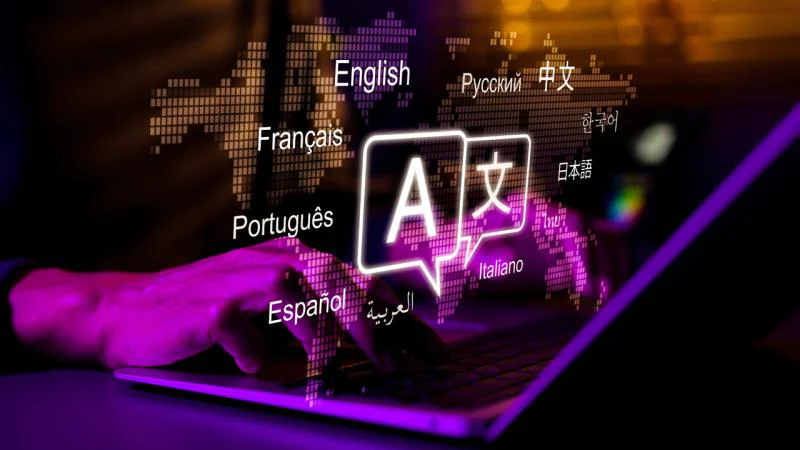
Lean on AI alone and things slip: cultural nuance gets missed, phrasing lands slightly unnatural, layouts break under longer text, local search intent goes unaddressed, and your brand voice flattens into something generic.
None of these are reasons to use less AI. There are reasons to use it the way it’s meant to be used, as a fast, capable teammate you direct, not a vending machine you feed a coin and expect a finished store from. (If you’re still setting up the basics, Shopify’s guide is a solid primer on what AI localization is and how to do it well.)
The gaps between an AI-translated store and one that sells in 2026
Here’s where “switch it on and walk away” quietly costs you: six assumptions that feel reasonable and aren’t.
Gap 1: “Isn’t translation the same as localization?”
This is the foundation, and getting it wrong quietly shapes every decision after it.
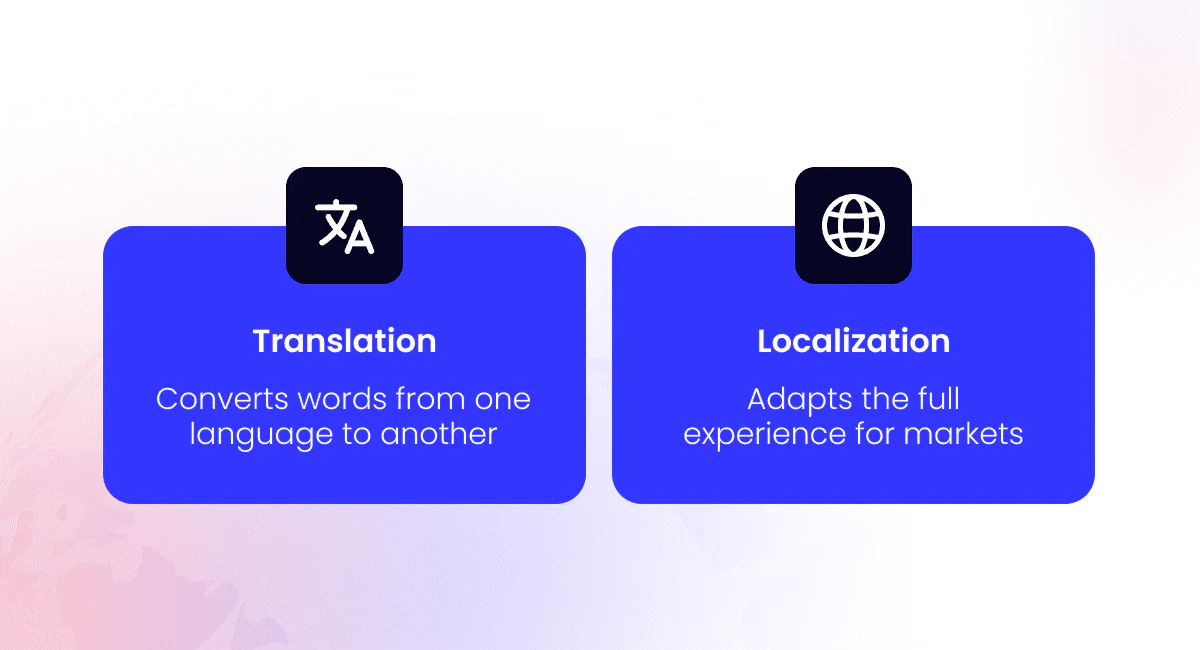
Translation converts your words from one language to another. Localization goes further: it adapts the whole experience, tone, meaning, cultural fit, and formatting so the store feels like it was built for that market, not shipped to it. Translation is one part of localization, not the whole thing.
Why does this matter before you touch any settings? Because if you believe translation is localization, you’ll judge your AI by the wrong test. You’ll see grammatically perfect French and conclude the job’s done when the reason you’re not converting is that everything translation doesn’t cover. You can’t direct AI toward a goal you haven’t correctly defined.
So the shift is to treat translation as step one, not the finish line. Everything below is what separates a store that’s merely translated from one that actually sells.
Gap 2: “One engine is enough for every language.”
This myth is everywhere because most tools run every language through the same AI engine by default. That’s the quiet problem: no single engine is best at everything.
Engine quality falls along language lines. Some are strongest on European languages, others handle character-based or Asian languages far more naturally, and for brand-heavy, creative copy, an engine tuned for tone tends to beat a literal one.
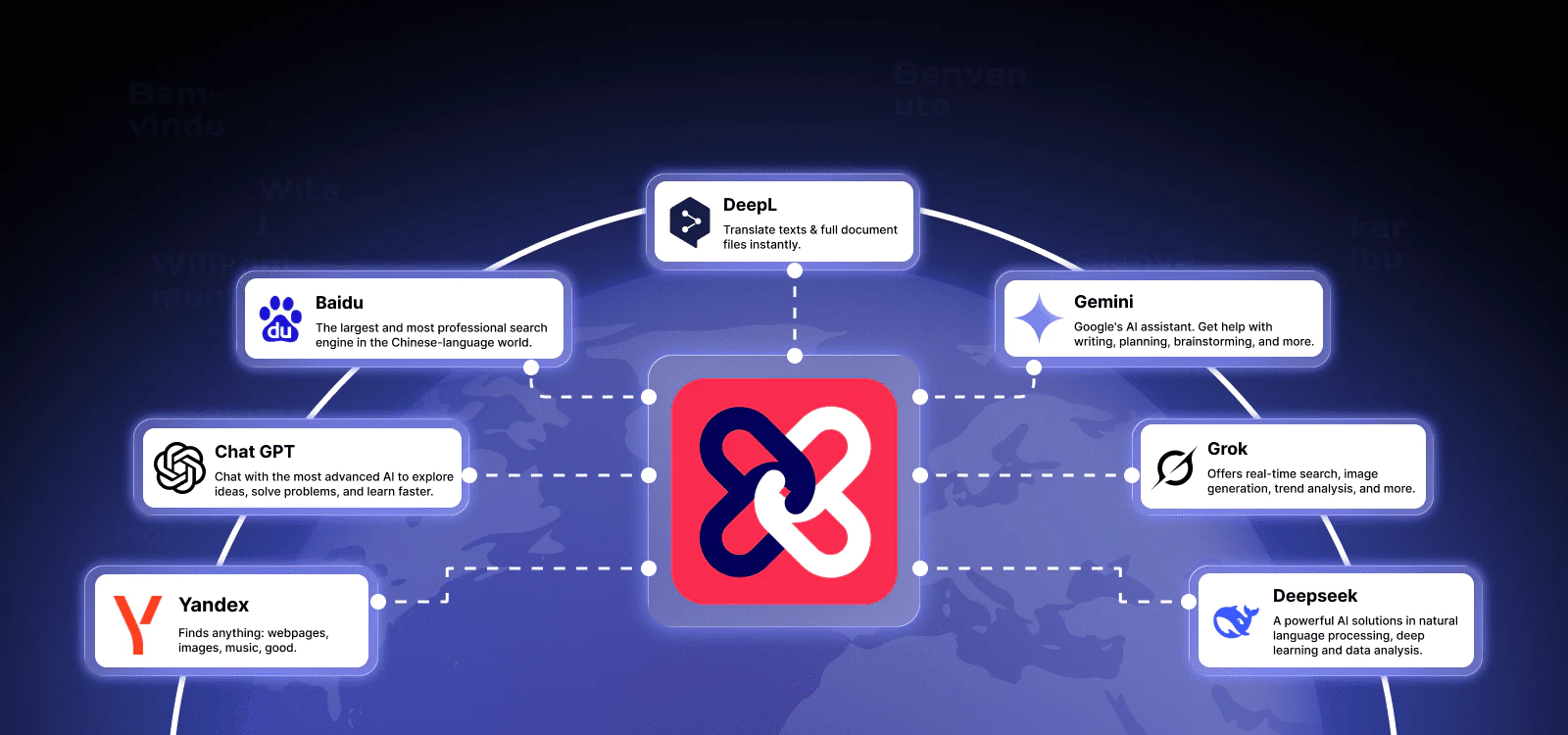
Run all your languages through one engine, and some markets quietly get weaker copy than others, and you’d never know because you can’t read the output yourself.
The fix: make engine choice a criterion when you pick a tool, and match the engine to each language rather than accepting one default for all of them. Our breakdown of which engine fits which language goes deep on this.
Gap 3: “Translation just needs to be accurate.”
Accuracy is the floor, not the finish. A translation can be word-perfect and still lose the thing that actually sells: your voice.
Your store has a personality, warm, bold, or a little cheeky, usually an extension of yours as the founder. In a market full of near-identical stores, it’s one of the few things competitors can’t copy, and it’s a big part of why someone buys from you and not the identical product one tab over.
A literal translation keeps the meaning but loses that personality. It’s rarely the single reason someone leaves; a great product can survive flat copy, but it quietly weakens the experience, and for shoppers on the fence, that’s often enough to tip them away.
Gap 4: “AI is smart enough to just get my brand.”
It’s a comforting assumption and a wrong one. Fluency isn’t the same as knowing who you are.
Imagine AI as the new hire on your team. What do you do with them on day one? Yes, onboarding. Even the sharpest hire needs to learn who your customers are, how your brand talks, and the handful of words you’d never let anyone say to a shopper.
AI is no different: capability isn’t context, and context is the part only you can give it. The AI isn’t bad; it was just never told who it was writing for, so it wrote for no one in particular.
The fix: the briefing is worth doing thoroughly, because everything downstream depends on it. Before the AI translates a single page, be specific: set a tone for the AI engine that is detailed, not just “friendly,” so your voice actually carries across every language, and build a glossary of every term it must never touch, your brand name, product names, and signature phrases, so they stay identical instead of getting translated into something no one recognizes.
Gap 5: “Never mind cultural nuance, AI’s got it.”
It’s tempting to wave this one off. Culture feels soft next to engines and glossaries, and AI is fluent enough to sound like it gets it. But sounding fluent isn’t the same as knowing the market. AI knows language patterns, not what a shopper in Seoul or São Paulo actually expects, trusts, or finds off-putting.
Culture shows up in small, high-stakes ways: which claims build trust versus suspicion, what counts as a good deal, which payment methods and sizing conventions feel normal, and how direct or reserved a market expects you to be.
That last one can even pull against your brand voice; a playful, first-name-basis brand may still need to keep more distance in a market that expects formality. Your voice should survive translation; local expectations decide how far to bend it.
Left to guess, AI defaults to the norms of the language it saw most in training, usually a generic, English-flavored default, and your store ends up feeling subtly foreign in the exact market you’re trying to win.
The fix: tell the AI what it can’t infer, the formality level, the local conventions, and the claims and norms that matter in each market, rather than assuming it knows. And where a market really matters to you, one quick gut-check from someone who lives there will catch what no model flags on its own.
Gap 6: “I translated all the text, so nothing’s missing.”
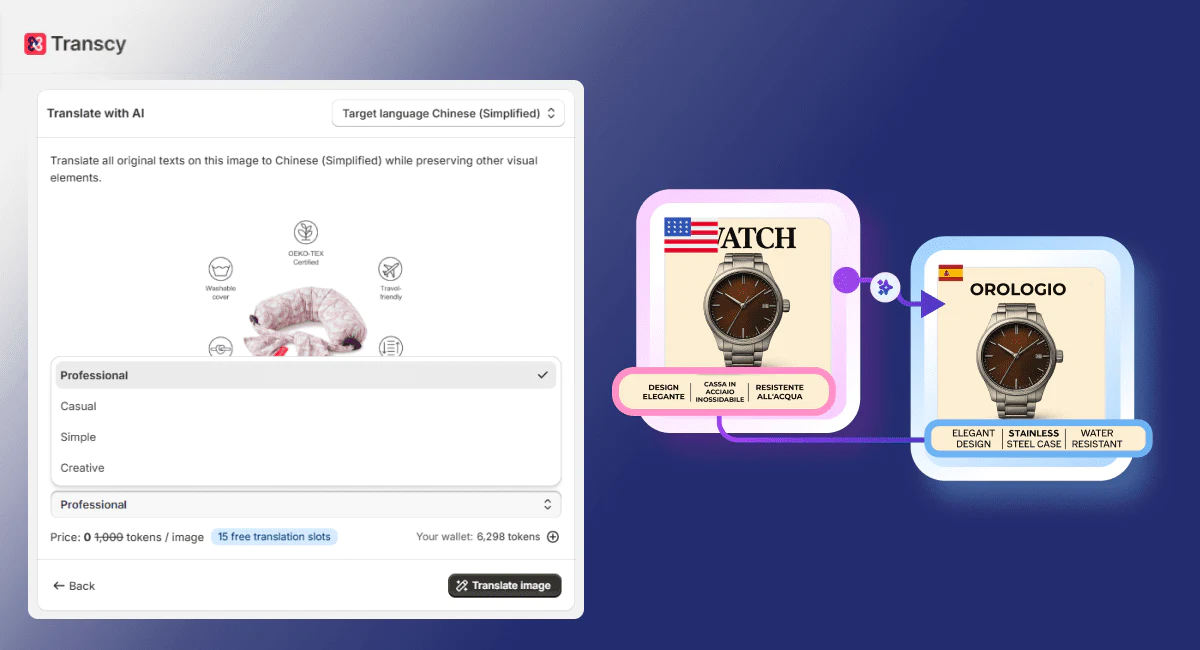
How about the words inside your images, the banners, the badges, the infographics?
Maybe you decided it wasn’t worth redoing every graphic for every language and figured shoppers don’t really read image text anyway. But they do, and images carry more weight than we give them credit for: in Salsify’s 2026 consumer research, shoppers ranked product images and video as the single most important thing on a product page, ahead of descriptions and even price. Images aren’t the part shoppers skip; they’re often the part they look at first.
The fix: translating the text inside your graphics isn’t optional; it’s part of the job. The good news is that it no longer means rebuilding every banner by hand. Transcy’s AI image translation reads the text inside an image and generates a localized version for you, per language and market, so your visuals keep pace with your copy.
The takeaway
The honest way to think about AI localization: it lowers the barrier to a new market, but it doesn’t remove the work, it moves it. The biggest mistake isn’t any single gap above; it’s the assumption underneath them all, that once AI is switched on, you can walk away. Brief it well and it’s a brilliant teammate; skip that and you get a fluent stranger writing your store.
You don’t have to fix all six at once. Start with the one you can check in five minutes: run your best-selling product page in each language back through a translator into English, and see if it still sounds like you. That one check usually surfaces the first leak.
Hopefully, these six gaps shift how you see AI in localization, less a button you press, more a capable teammate you guide. Close them, and the same AI that was quietly costing you sales becomes the thing that turns browsers in every market into buyers.
FAQs

"I'm a Content Specialist with over 2 years of experience in the eCommerce industry, creating insight-driven content that helps merchants navigate global expansion with clarity and confidence. Combining hands-on experience with a deep understanding of cross-border commerce, I deliver practical, actionable perspectives that make going global more accessible and successful for growing brands."
Table of Contents
"I'm a Content Specialist with over 2 years of experience in the eCommerce industry, creating insight-driven content that helps merchants navigate global expansion with clarity and confidence. Combining hands-on experience with a deep understanding of cross-border commerce, I deliver practical, actionable perspectives that make going global more accessible and successful for growing brands."