

If you sell online across borders, you already know the opportunity comes with extra moving parts. Shoppers are discovering and buying from sellers around the world, while the rules behind a delivery can change from one market to the next.
As we head toward Black Friday and Cyber Monday, let’s look at what the evidence can tell us and how it can help you plan for the season. We’ll start with the global signals, look at the markets you may be weighing, then bring those findings back to your BFCM decisions.
The Global Picture of Cross-Border Ecommerce in 2026
Several signals suggest cross-border commerce is growing at least alongside ecommerce overall. These growth figures offer a glimpse of where cross-border ecommerce may be headed, but they’re only part of the picture. Shopper expectations, platform shifts, and new trade rules are also changing the landscape. Together, these signals can help you see where opportunities are emerging and what may affect your plans.
Cross-Border Growth Is Keeping Pace With Overall Ecommerce
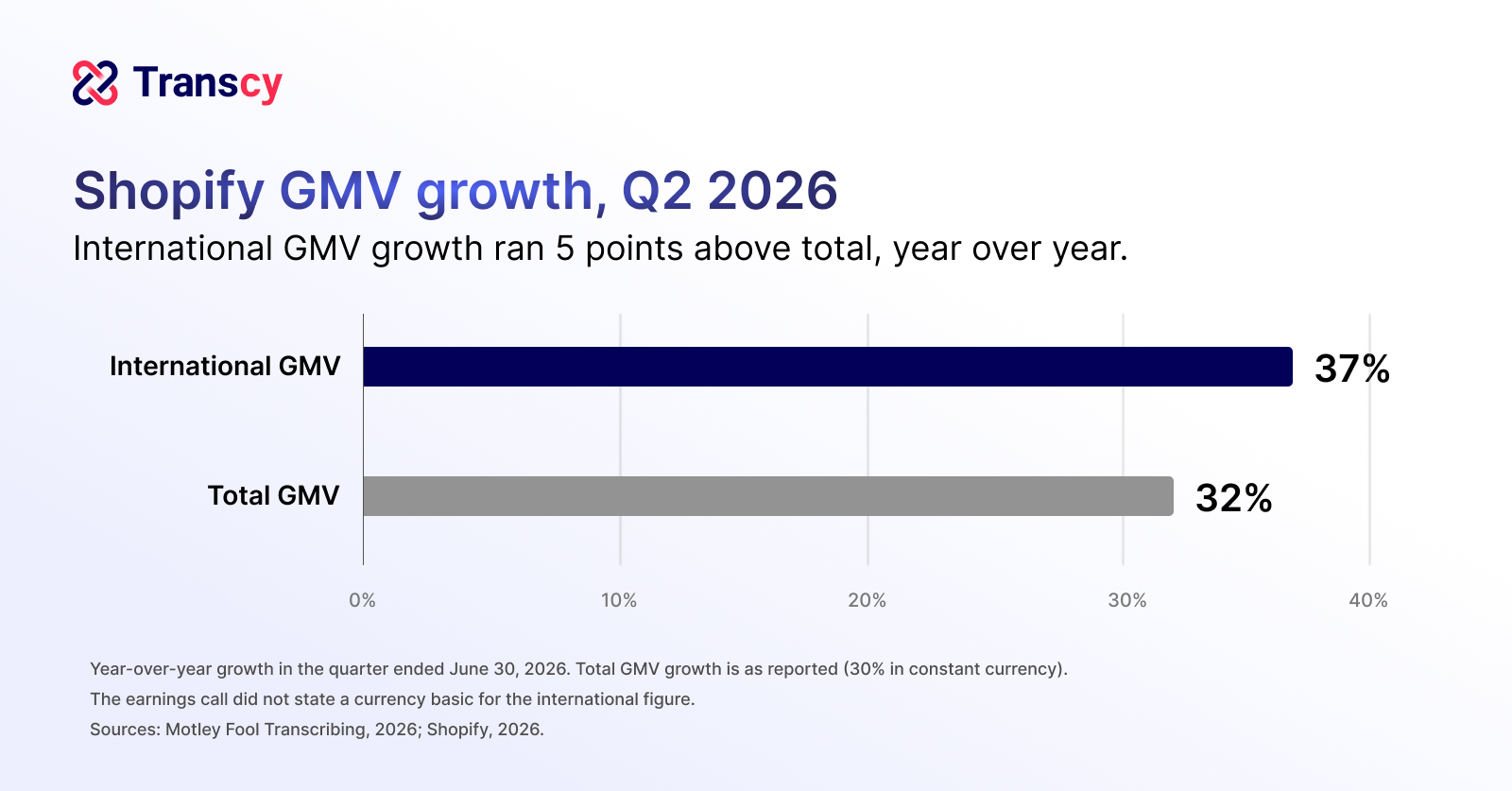
The growth can show up in more international sales and higher spending per order. Shopify reported international GMV growth of 37% in Q2 2026, compared with 32% overall (Motley Fool Transcribing, 2026; Shopify, 2026). During BFCM 2025, Stripe reported cross-border payment value grew 37% (Stripe, 2025), while Global-e reported 44% GMV growth in Q2 2026 (Global-e, 2026).
From a seasonal perspective, last year’s BFCM data shows that cross-border order value and international revenue rose during the peak period. In FlavorCloud’s benchmark, average cross-border order value increased from $114.26 earlier in 2025 to $136.36 during BFCM. Order volume grew 8%, while international revenue grew 27% (FlavorCloud, 2025).
Taken together, these figures point to steady growth in international sales. If you’re weighing ways to grow revenue beyond your home market, selling overseas remains a promising opportunity, and these trends offer encouraging signs of where that growth could come from.
Low-Price Marketplaces Are Winning a Bigger Share of Orders
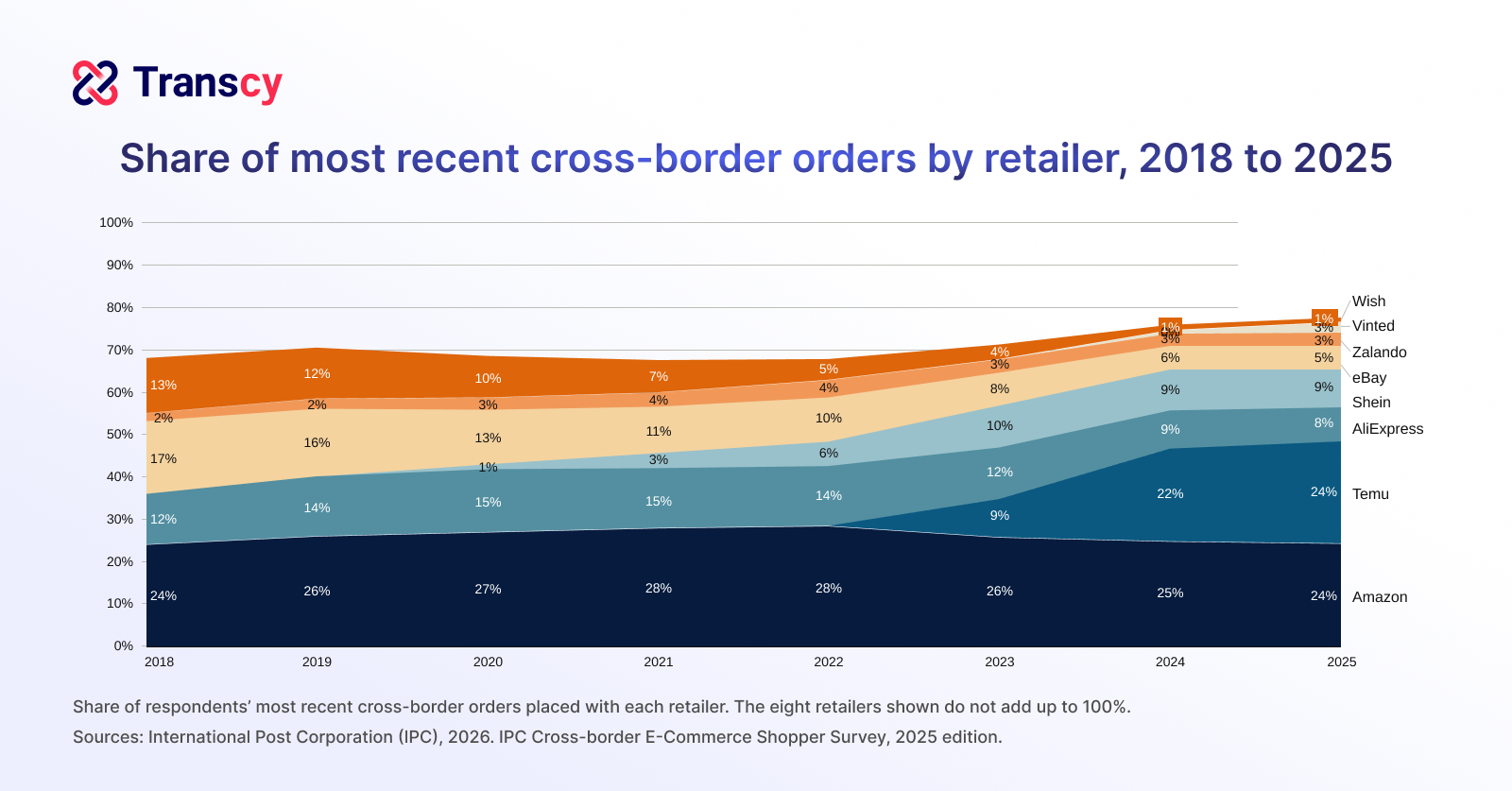
Beyond the broader growth signals, IPC’s survey shows which platforms frequent cross-border shoppers used for their most recent international order. Temu’s share rose from less than 1% in 2022 to 24% in 2025, matching Amazon. Shein’s share has been broadly stable in recent years, while Wish, eBay, and AliExpress lost ground between 2018 and 2025 (IPC, 2026).
Price is Temu’s biggest edge: 60% of its shoppers across six countries said affordable prices drew them to their first purchase (Ipsos, 2025). A key reason is its consumer-to-manufacturer (C2M) model: factories bid against each other for orders and ship on consignment, while Temu earns from logistics and marketing fees rather than sales commissions (Isaac, 2025). In our reading, that puts pressure on merchants who resell generic goods, since their suppliers can also sell direct at factory-level prices.
Clear Delivery Charges Remain the Top Need for Cross-Border Shoppers
Cross-border shopping is becoming more familiar to consumers, and many shop internationally regularly. DHL’s survey found that 70% of online shoppers had bought internationally, while 45% made cross-border purchases more than once a month (DHL, 2026).
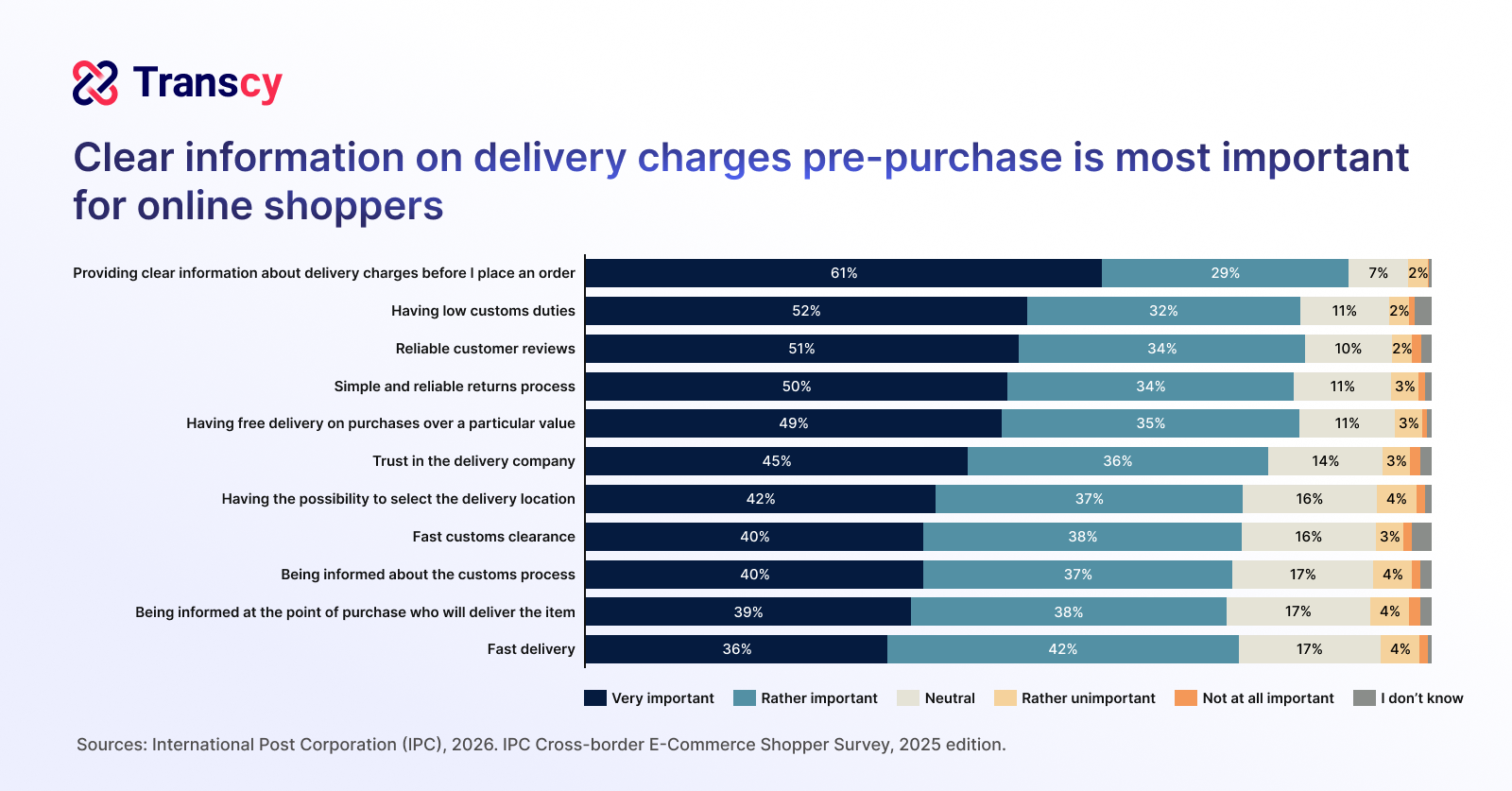
But familiarity doesn’t remove friction. In a separate survey of 1,000 U.S. shoppers, 66% said unmet delivery expectations had led them to abandon a purchase, and 62% cited unexpected customs or tax charges (DHL, 2026). IPC’s survey points to the same need for transparency: 61% of cross-border shoppers said clear delivery charges before purchase were essential (IPC, 2026).
Duty-Free Small Parcels Are Ending in the Biggest Markets
The rules behind cross-border costs are changing in the three biggest markets. The US ended duty-free treatment for low-value parcels in 2025 and has written the end into law from July 2027 (Federal Register, 2026). Low-value shipments entering under the exemption fell about 31%, from 1.36 billion in fiscal 2024 to 942.5 million in fiscal 2025 (CBP, 2026).
The EU added a €3 duty per item on parcels under €150 in July 2026 (European Commission, 2026), after about 4.6 billion low-value parcels entered the bloc in 2024, twice the year before (European Commission, 2025). The UK will end its £135 duty relief by October 2028 at the latest (HMRC, 2026), after roughly 600 million low-value consignments arrived in 2024 (HMRC, 2025).
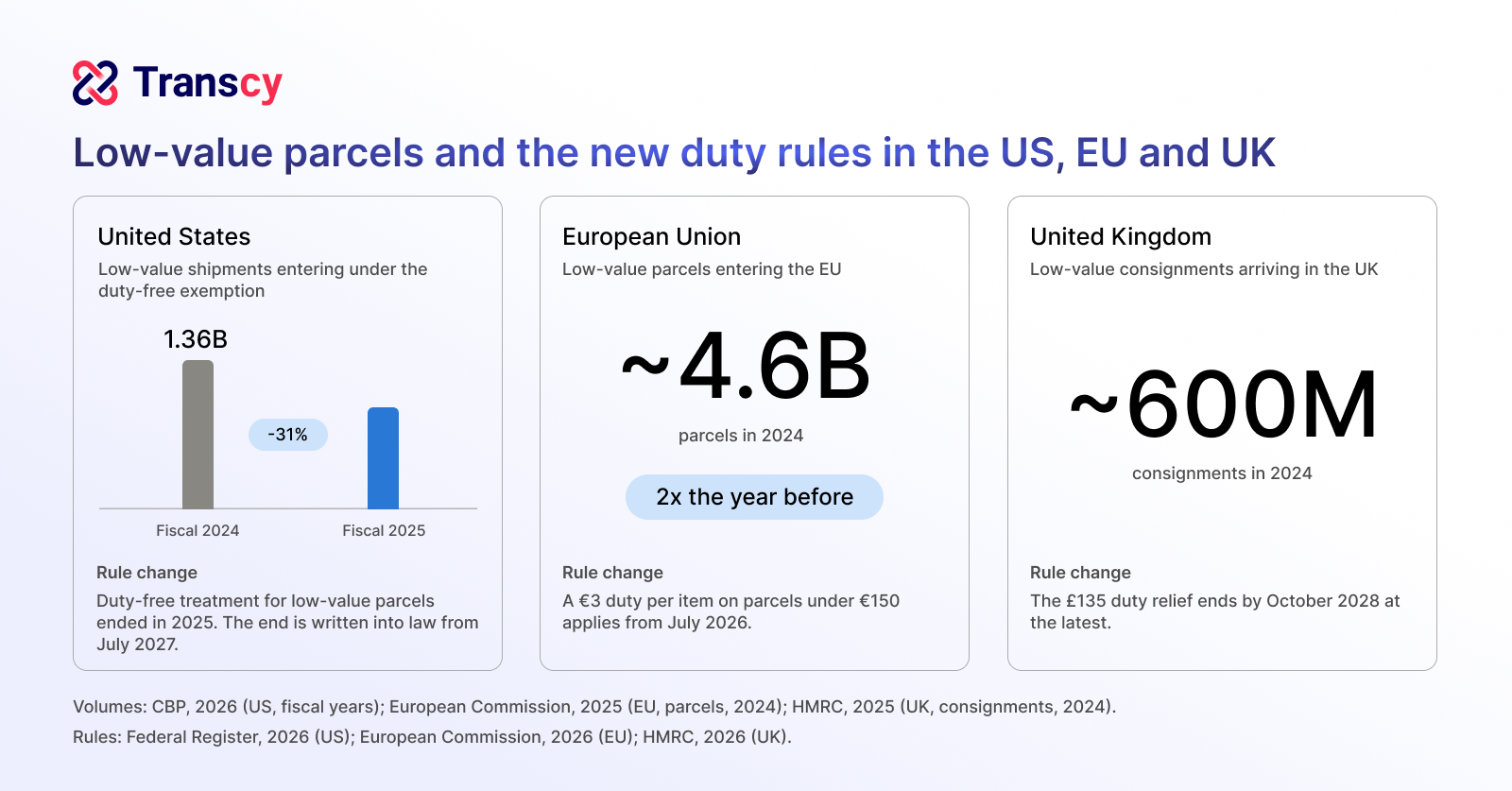
Small parcels are moving from duty-free by default to duty-paid by default. A cost that used to stay out of sight is becoming part of the price shoppers see, which is why showing it early matters.
Market by Market: Where Cross-Border Ecommerce Is Heading
Cross-border ecommerce is growing in different ways across markets. While some shoppers are drawn to better prices and products they cannot find locally, others are becoming more cautious as costs rise and new regulations take effect. Understanding these differences can help you decide where to focus and how to prepare for the changes ahead.
US: Shoppers Want Better Prices, but Trust Still Matters
US shoppers are willing to buy from overseas, but they need a good reason to do so. According to DHL, purchases from China rose from 60% in 2025 to 63% in 2026. Purchases from the UK increased from 25% to 28%, while those from Canada grew from 18% to 23%. Still, 52% of US shoppers avoid international purchases because they worry about fraud or do not trust overseas sellers. Across markets, lower prices and access to products unavailable at home remain the two main reasons people shop internationally, cited by 60% and 44% of shoppers, respectively (DHL, 2026).
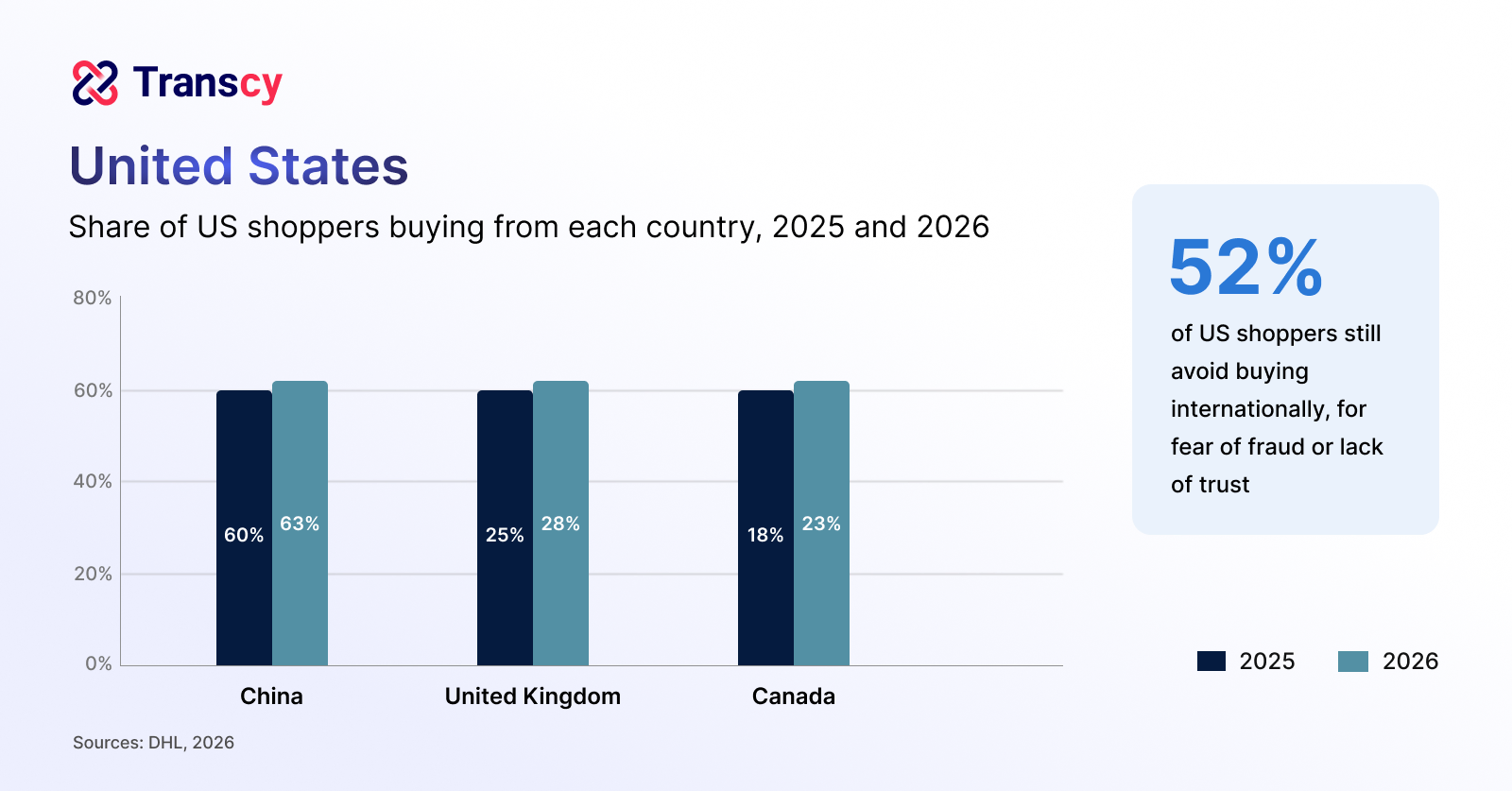
Price can also make or break the sale. In April 2026, US audiences for Temu and Shein were still around 30% below their pre-tariff levels (Measure Protocol, 2026). Meanwhile, 66% of shoppers said they would look for domestic alternatives if overseas prices increased (AlixPartners, 2025). In July 2026, new Section 301 tariffs followed, setting rates of 10% for economies including the UK and Canada and 12.5% for most others (USTR, 2026).
For merchants targeting US shoppers, the core strategy is honesty: build a source of trust into every touchpoint, from the first ad to checkout. Lead with buyer protection (48%) and free returns (43%) (DHL, 2026), back them with reliable reviews, which about half of cross-border shoppers consider essential (IPC, 2026), and keep the final price clear and consistent throughout.
UK: Import Duties Are Moving to the Seller’s Checkout
The UK is both a source and a destination for cross-border shoppers. It is the fourth most popular country shoppers buy from internationally (17%), while 34% of businesses already sell to UK customers (DHL, 2026).
HMRC plans to make sellers, or the marketplaces facilitating their sales, responsible for collecting customs duty on low-value imports at checkout and paying it quarterly. Sellers without a UK presence would also need a UK-based fiscal representative who shares liability for the duty (HMRC, 2026).
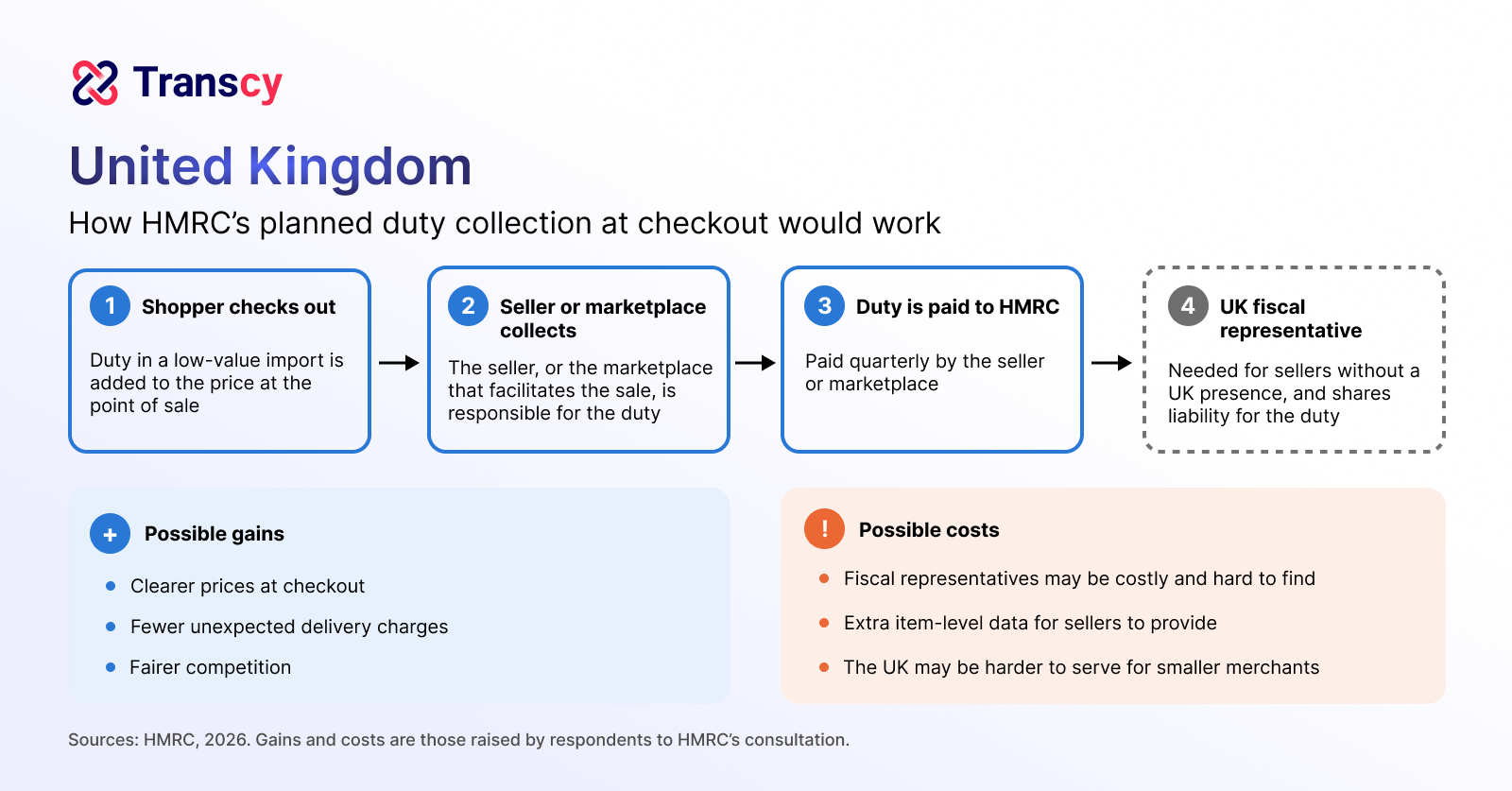
If the plan takes effect by October 2028, it could bring both benefits and new costs. Collecting duty upfront could make prices more transparent, reduce unexpected delivery charges, and create fairer competition. However, HMRC respondents also raised concerns about the cost and availability of fiscal representatives, as well as the extra item-level data sellers would need to provide. These requirements could make the UK market harder to navigate for smaller merchants (HMRC, 2026).
EU: New Import Costs Target Parcels From Outside the Bloc
Cross-border shopping in Europe still largely happens between neighbors. In 2024, 35% of EU consumers bought from another EU country, compared with 27% who purchased from outside the bloc. However, the share buying from non-EU countries has grown quickly, up from 20% in 2022 (European Commission, 2025).
New costs are targeting this growing flow of imports. In 2025, 13.1% of EU online spending on physical goods went to stores outside the bloc, up from 2.3% in 2020 (Ecommerce News, 2026). Since July 2026, a €3 customs duty has applied to qualifying low-value parcels worth up to €150 imported from outside the EU, mainly through e-commerce (European Commission, 2026). A Union handling fee, expected to be €2, is also due from 1 November, alongside broader customs responsibilities for non-EU platforms and sellers (European Commission, 2026).
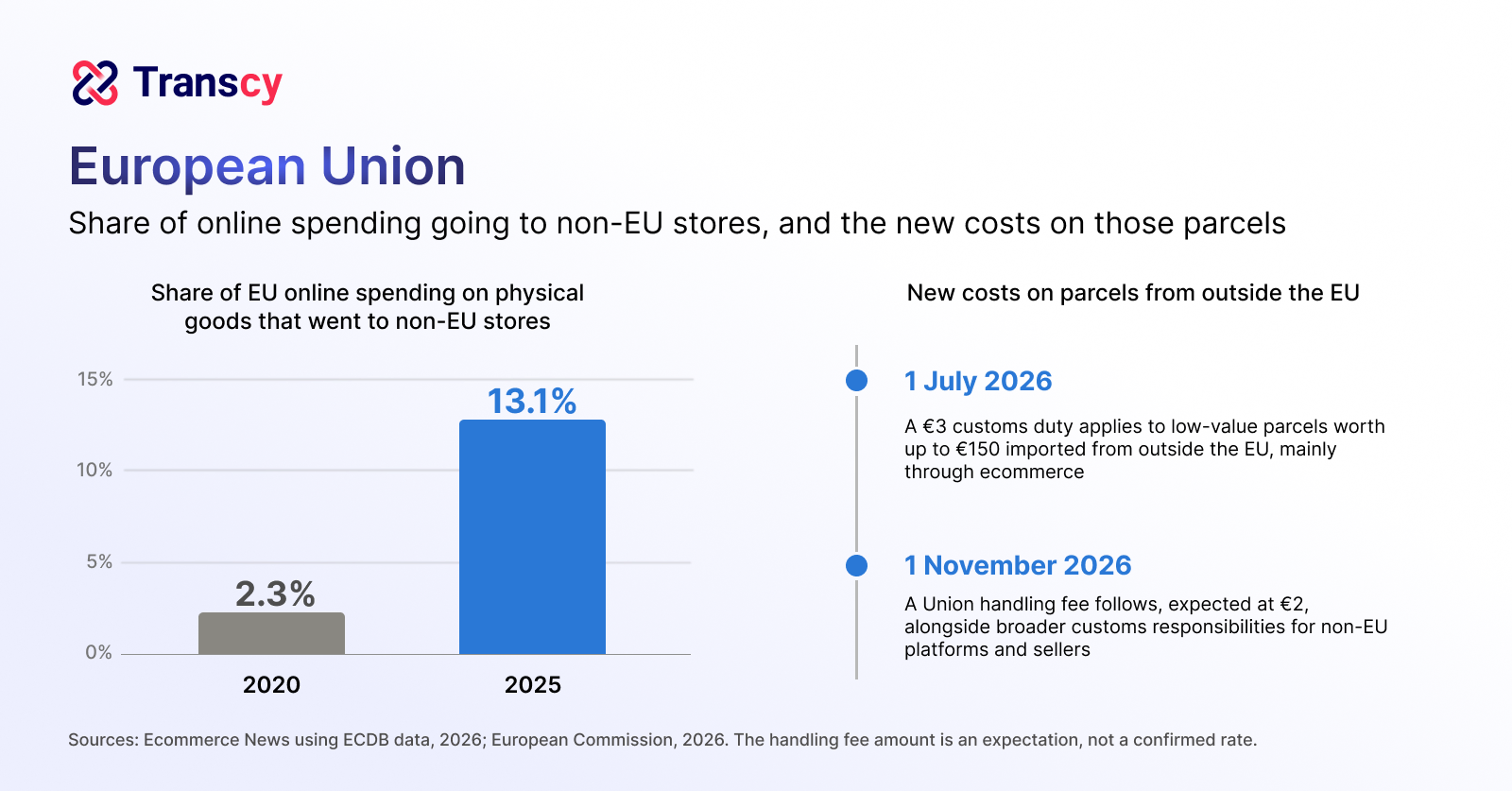
These changes matter most for merchants shipping into the EU from outside the bloc. EU-based sellers may have an edge in nearby markets, while international merchants need to factor in the added costs, especially when selling low-priced products with tight margins.
Japan: Small Parcels Face Tighter Checks, with Checkout Tax Coming in 2028
Japan’s customs processed around 227 million import permits in 2025, up 19.5% from 2024. About 92% covered shipments worth ¥10,000 or less (Ministry of Finance, 2026). With consumer parcels often arriving with insufficient declaration data to identify infringing goods, customs has already stepped up enforcement. Since April 2026, brokers that repeatedly submit improper declarations have faced temporary suspension from the fast-track procedure. Customs has also started regular discussions with around ten major platforms to improve compliance (Ministry of Finance, 2026).
Tax changes are next. Under a law passed on March 31, 2026, sellers will need to collect consumption tax at checkout on imports worth ¥10,000 or less from April 1, 2028. Platforms handling more than ¥5 billion in these sales will be liable for the tax in place of sellers, with registration opening on October 1, 2027 (Ministry of Finance, 2026).
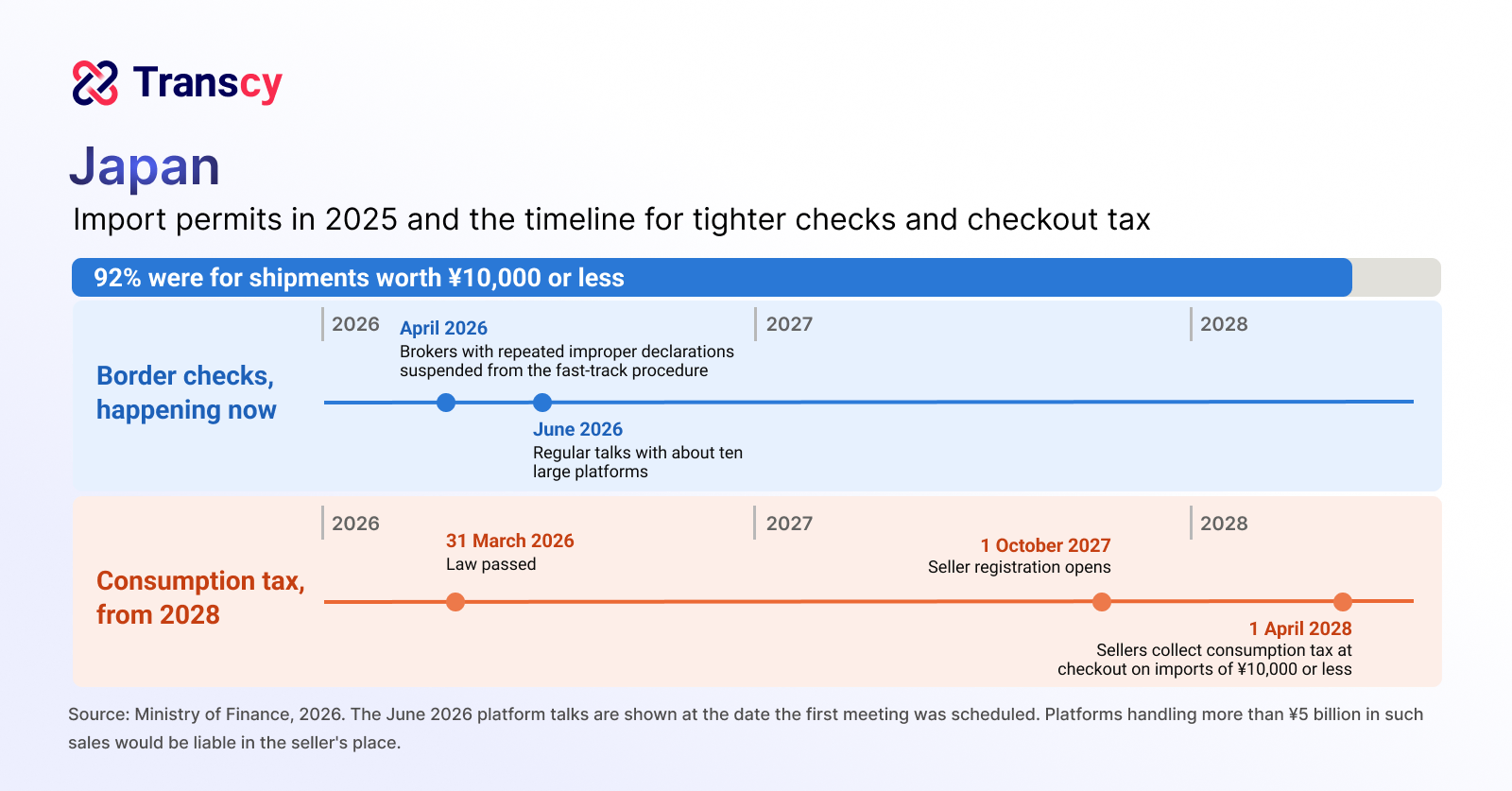
The same trend is emerging across major markets, with small parcels facing closer scrutiny. For merchants, tighter checks and new charges can create unexpected costs for shoppers and undermine trust. To avoid surprises, make sure the full price, including applicable duties and taxes, is clear at checkout.
South Korea: Cross-Border Shopping Shows Signs of Cooling
South Korean consumers spent around ₩8.5 trillion on direct overseas purchases in 2025, based on the four quarterly reports combined. About 65% of that spending went to China (Ministry of Data and Statistics, 2026).
However, demand started to soften in 2026. Direct overseas purchases fell 2.7% in the second quarter, marking the first decline in 14 quarters. Purchases from China dropped 5.7%, and those from the US fell 6.6%. Meanwhile, purchases from Japan rose 33.8% (Newsis, 2026).
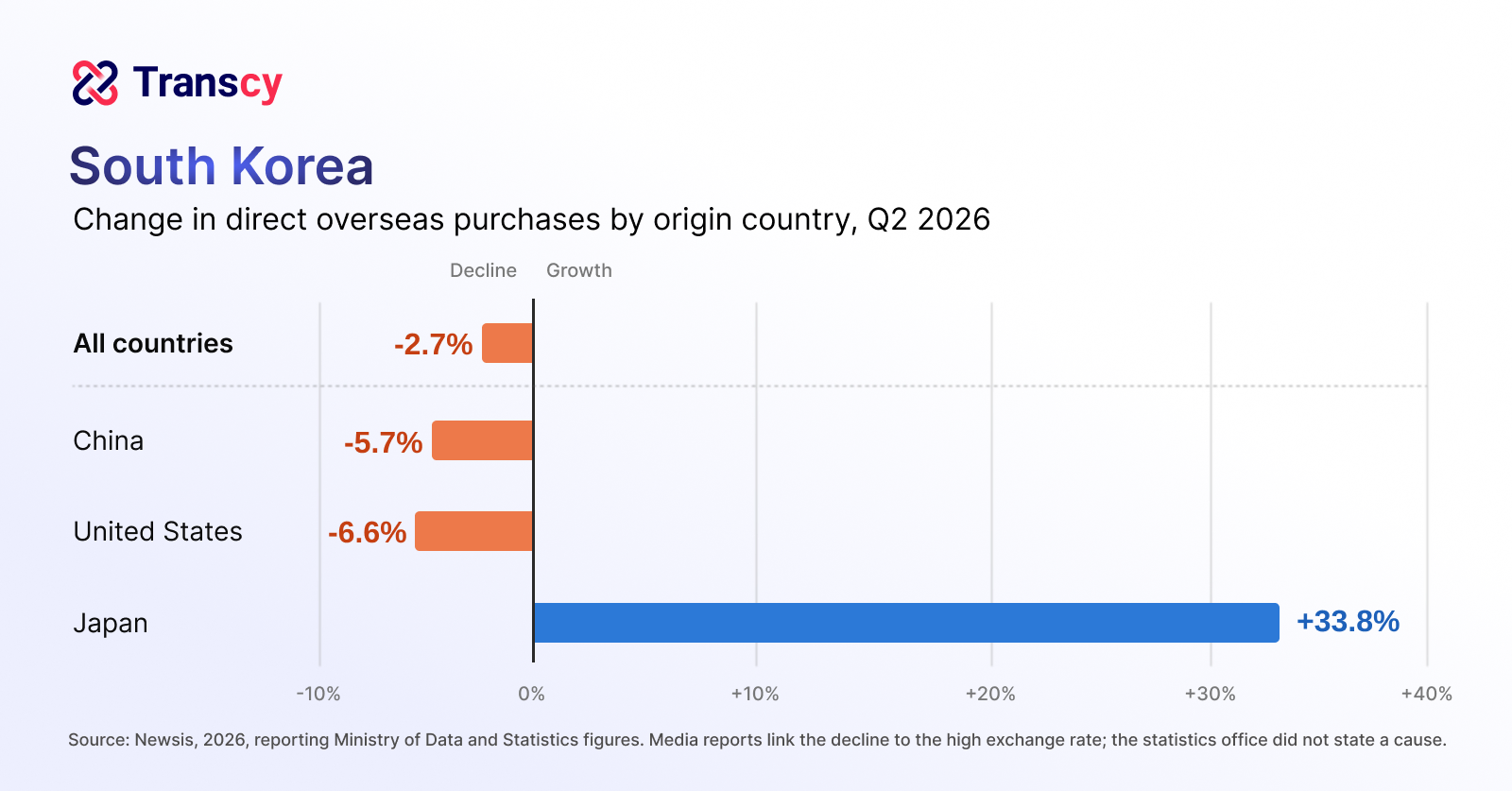
Media reports have linked the decline to the high exchange rate (YTN, 2026). This shift is a useful reminder that international demand can change when shoppers face higher costs, including those caused by currency movements.
Where Cross-Border Sellers Should Focus Ahead of BFCM 2026
The trends above point to several priorities for cross-border sellers preparing for Black Friday. From timing your promotions to building trust and setting clear prices, here is how to approach your BFCM strategy this year.
Start the International Season Early
Shoppers are not waiting for Black Friday to start shopping. In a nine-market survey by messaging platform Infobip, 25% of consumers wanted promotions to begin in October or earlier, while another 34% preferred early November (Infobip, 2026). Adobe also expects US online spending in October alone to reach $95.8 billion, an 8% increase year over year (Adobe, 2026).
At the same time, new duty and tax rules are adding costs and checks to cross-border shipments. Shipping deadlines also arrive soon after Cyber Monday on 30 November. For packages sent from the US, USPS recommends mailing most international shipments by 9 December (USPS, 2026).
Prepare your offers, delivery cutoffs, and cross-border costs early. Starting promotions ahead of the main event helps you meet shoppers when they are ready to buy, while giving you more time to plan pricing and communicate the full cost clearly.
Know When Each Market Peaks
BFCM season does not look the same in every market. Mexico’s El Buen Fin runs from 13 to 17 November (Expansión, 2026), while Singles’ Day falls on 11 November in China and Southeast Asia (FlavorCloud, 2026). Germany’s Black Week runs from 20 to 27 November (inside digital, 2026). In the Gulf, Black Friday is known as White Friday. In 2025, Amazon.ae ran its sale from 22 to 29 November, while noon promoted its own Yellow Friday event (Property Finder, 2025).
Before launching a campaign, check the key sale dates and local event names in each target market. Aligning your promotions with local shopping habits can help your offers reach customers at the right moment.
Show the Full Price in the Shopper’s Currency and Language
Unexpected costs can quickly derail a purchase. Extra costs were the leading reason for US shoppers abandoning checkout, cited by 40% of those who abandoned for reasons other than simply browsing (Baymard, 2025). Local pricing matters, too: 41% of shoppers in DHL’s survey said prices displayed in their own currency would encourage them to buy from another country. Yet around one in five B2C businesses in Canada, the US, and the UK still do not localize both language and currency (DHL, 2026).
Make the total cost clear before shoppers pay, using a language they understand and a currency they recognize. This helps them assess the real cost of an order and reduces the risk of unexpected charges at checkout.
Build Trust at Every Touchpoint
Trust remains a major barrier to cross-border shopping. In DHL’s survey, fear of fraud or lack of trust and concerns about delivery costs and times were each cited by 45% of shoppers as reasons not to buy from abroad. Seven in ten also said they would not shop with a brand if they did not trust its delivery and returns provider (DHL, 2026).
For first-time buyers, trust needs to be built throughout the shopping journey, especially when they have no previous experience with your store.
- Discovery and ads: Present your brand clearly, with verifiable business details, contact information, and genuine customer reviews or photos.
- Product page: Feature authentic reviews and make delivery estimates and return terms easy to find.
- Checkout: Offer secure, familiar payment methods with buyer protection, and show the full price before payment.
- Delivery: Provide tracking, realistic transit times, and a delivery service customers can rely on.
- After the sale: Make returns straightforward and respond to customer questions promptly in their language.
Compete on Value, Not Just Price
Low-price marketplaces put pressure on pricing, but their advantage can shrink when import costs rise. After the EU introduced its new duty on 1 July, small parcels entering the bloc fell by 30% to 40%, according to French customs figures. Sales volumes at Temu and AliExpress also dropped by 50% and 37%, respectively, between June and July (Euronews, 2026). These are early figures from a single month, so they should be treated as an initial signal rather than a long-term trend.
Price is not the only reason shoppers buy from abroad. In DHL’s survey, 32% cited better product quality as a motivation for cross-border shopping (DHL, 2026). Highlight what makes your products worth buying, and keep the final price transparent instead of competing on price alone.
Conclusion
Cross-border selling comes with more moving parts, and each brings both opportunities and challenges. Growing demand opens the door to more customers beyond your home market but also brings more competition. New duty and tax rules add costs and responsibilities at checkout, making clear pricing more important than ever. And as shoppers weigh trust before buying from abroad, sellers who build confidence from the first click have an advantage. For BFCM 2026, the best-prepared sellers will be those who turn these shifts into action early, leaving enough time to get pricing, delivery, and trust in place before Black Friday.

"The best Shopify translation and localization app designed to help merchants expand globally by translating their store content into multiple languages and adapting it to different currencies and markets."


Table of Contents
"The best Shopify translation and localization app designed to help merchants expand globally by translating their store content into multiple languages and adapting it to different currencies and markets."