
🎁 Exclusive offer for Transcy merchants:
Start your go global journey today with Transcy and claim 30% off Consentmo for your first 3 months to build a fully localized and compliant Shopify store.
Your Shopify store is live in five languages. Product descriptions are translated. The currency switcher works. You feel ready for the global market.
Then a customer flags that your checkout interface isn’t in French. A German shopper can’t find a return policy in their language. Or worse, you receive a legal notice because your privacy page violates local data laws.
The uncomfortable truth is that translation is not the same as compliance. True international compliance requires a dual approach: flawless storefront localization on the front end and rock-solid data privacy on the back end.
To give Shopify merchants a definitive playbook, Transcy (the experts in Shopify translation) and Consentmo (the leaders in Shopify compliance) have teamed up to write this guide. Read on to discover what global brands actually need to localize to sell internationally without legal exposure, plus an exclusive offer inside to help you get compliant today.
Most merchants treat localization as a content problem. Translate the product descriptions and switch the currency, and the store is ready for a new market. That mindset works until it doesn’t.
Regional compliance for multilingual stores goes well beyond word-for-word translation. It covers:
None of this is automatically handled by adding a new language to your Shopify admin. It requires intentional localization — content that doesn’t just speak the customer’s language but respects the legal and cultural expectations of their market.
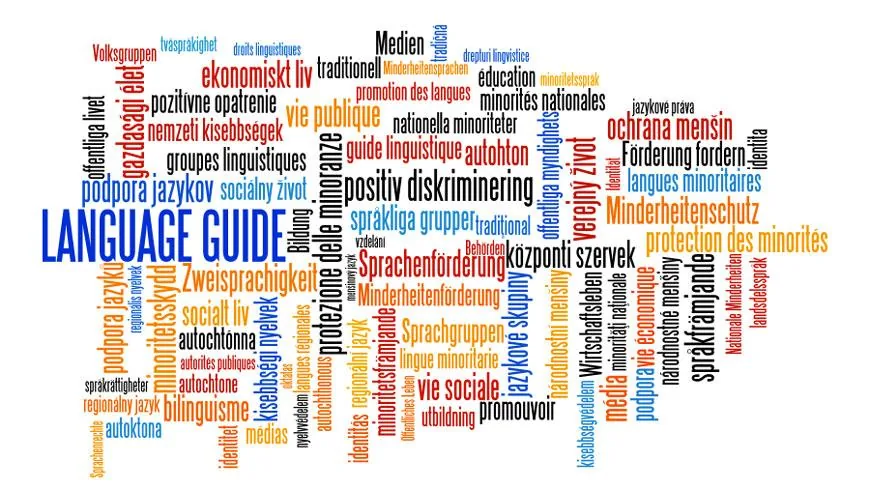
Some countries don’t just prefer their local language; they expect it and, in certain contexts, require it by law. If you’re selling into these markets, compliance starts with localization.
The European Union represents one of the most legally demanding environments for multilingual e-commerce. Individual member states layer their own language requirements on top of EU-wide consumer protection directives.
France enforces the Toubon Law, passed in 1994, which mandates that all commercial content directed at French consumers, including advertisements, product descriptions, instruction manuals, contracts, and software interfaces, must be written in French. This isn’t a best-practice recommendation. Violations can result in fines, and French distributors may refuse to carry non-compliant products entirely. If your Shopify store targets French customers, a French-language version isn’t optional.
Germany applies the DIN EN 82079-1 standard to product documentation and expects full German-language support for any product information directed at German consumers. German consumer protection law is also notably strict around pricing transparency, cancellation rights, and the clarity of Terms and Conditions, all of which need to be available in German.
EU-wide, the Consumer Rights Directive requires that merchants clearly communicate return and withdrawal rights to buyers in a language they understand. The 14-day right of withdrawal is a legal minimum across EU member states, and failing to present it clearly in the customer’s language can make it unenforceable, exposing merchants to disputes and chargebacks.
Selling into Asia-Pacific markets introduces a different dimension of localization complexity: it’s not just about language but also script, structure, and cultural format.
Japan’s Consumer Product Safety Act requires that product safety warnings and key product information be provided in Japanese. But compliance in Japan goes deeper than legal text. Japanese shoppers expect checkout forms to support input in both the Hiragana and Katakana scripts. A checkout form that doesn’t accommodate this creates immediate friction and signals to Japanese customers that the store wasn’t built for them.
South Korea similarly requires that product information for electronic goods be provided in Korean under the Electrical Appliances and Consumer Products Safety Act. Offering a Korean-language storefront without compliant product content creates a mismatch that can undermine trust and trigger enforcement.
In Brazil, the Lei Geral de Proteção de Dados (LGPD) requires that privacy-related disclosures, including how customer data is collected, used, and stored, be clearly accessible in Portuguese. Merchants selling to Brazilian customers need a Portuguese-language privacy policy that reflects LGPD requirements, not a generic policy translated from English.
Across US states with active consumer privacy laws, California (CCPA/CPRA), Virginia, Colorado, and newer 2026 additions, data rights notices must be written clearly and accessibly. While these laws don’t always mandate a specific language, they require that disclosures be understandable to the consumer. For stores with significant Spanish-speaking audiences, this has practical localization implications.
Understanding which markets have legal requirements is the first step. The second is knowing what content actually needs to be localized and to what standard.
Physical products sold across borders carry localization requirements that go beyond store copy:
The checkout flow is where localization gaps become immediately visible to customers. And while many of these are UX expectations rather than legal mandates, they shape whether shoppers actually convert.
Two technical elements directly affect whether your multilingual store reaches the right audience and whether search engines treat it as compliant.
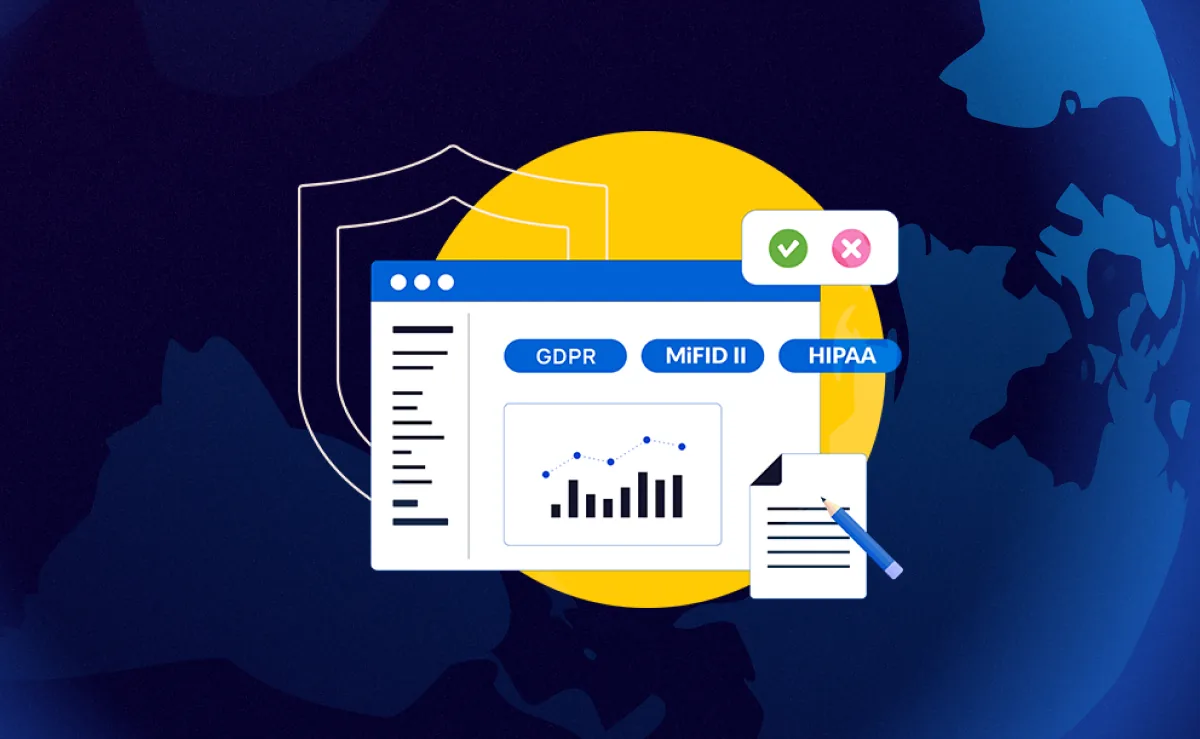
Getting your localization right takes care of a significant portion of your compliance responsibilities. But there’s one layer that sits outside the scope of content localization entirely: consent and data privacy management.
Cookie banners, consent notices, and data rights pages need more than translation. They need to:
Keeping this layer compliant manually is an ongoing operational burden. This is exactly why Transcy partners with Consentmo. While Transcy ensures your storefront text, currency, and media match the local market, Consentmo automates the backend compliance layer, ensuring your cookie banners, privacy pages, and consent flows are legally current for every region you operate in.
🎁 Exclusive offer for Transcy merchants:
Start your go global journey today with Transcy and claim 30% off Consentmo for your first 3 months to build a fully localized and compliant Shopify store.
Use this checklist when launching into a new market or auditing an existing multilingual setup.
Going multilingual is one of the highest-leverage decisions a Shopify brand can make. But as we have explored in this collaborative guide, a successful global expansion requires managing two sides of the same coin:
By combining a native translation strategy with automated consent management, your Shopify store can scale globally with confidence, building deep consumer trust while staying completely protected from legal exposure.
Written by Transcy Team, in collaboration with Consentmo.

"The best Shopify translation and localization app designed to help merchants expand globally by translating their store content into multiple languages and adapting it to different currencies and markets."


Table of Contents
Ready to go global?
Join 250,000+ merchants expanding worldwide. Free plan available.
"The best Shopify translation and localization app designed to help merchants expand globally by translating their store content into multiple languages and adapting it to different currencies and markets."